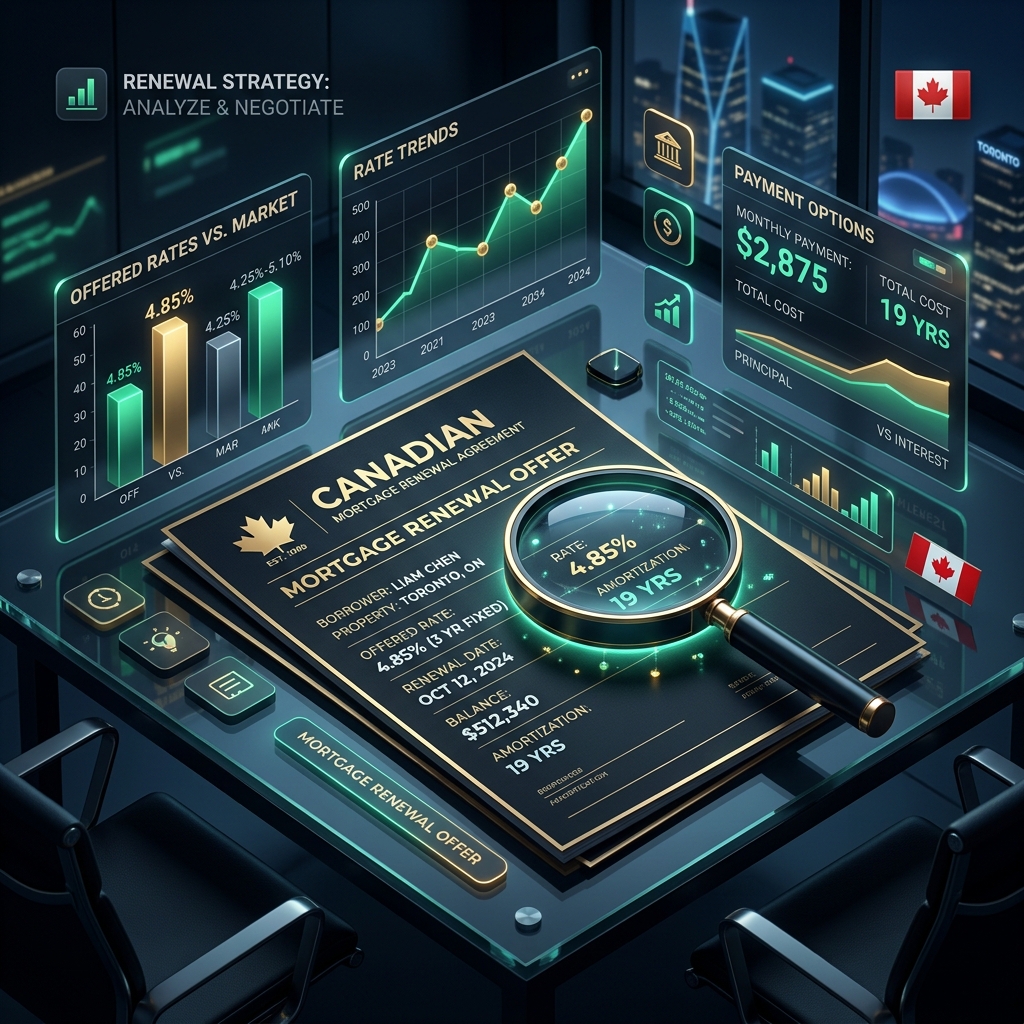
Mortgage Renewal Calculator Canada 2026: Calculate Your Payment Shock
The 2026 mortgage renewal cliff is here, and millions of Canadians are facing a significant payment shock as their ultra-low 1.5% to 2.5% fixed rates from 2021 expire into a 4.5% to 5.5% reality.
Understanding the "Payment Shock" Matrix
When we talk about "Payment Shock," we are referring to the percentage increase in your monthly obligation upon renewal. For a typical homeowner who purchased in 2021 with a 5-year fixed rate, the increase isn't just incremental—it can be structural. According to data from Statistics Canada and the Bank of Canada, the average debt-servicing ratio is expected to hit record levels by mid-2026.
Benchmark Pulse: Current Renewal Rates
Avg Major Bank Rate (March 2026)
Most Popular Term Choice
Static for 3 consecutive holds
Scenario Snapshots: The Reality of 2026 Renewals
Here's how it works for a sample $500,000 mortgage balance at renewal time:
| Metric | Original (2021) | Renewal (2026) | Difference |
|---|---|---|---|
| Interest Rate | 1.74% | 5.24% | +3.5% |
| Monthly Payment | $2,055 | $2,978 | +$923 |
| Total Interest (5-yr) | $41,200 | $124,500 | +$83,300 |
Strategy Advisor: Avoiding the Payment Shock
There's the thing: most lenders won't proactively offer you the best survival strategies. Here's what I found that might work for you when your renewal papers arrive:
- Re-Amortization: If you are struggling with the monthly cash flow, CMHC Guidelines allow for extending your amortization back to 25 or 30 years in some hardship cases. But here's the problem: this will cost you significantly more in interest over time.
- Lump-Sum Prepayments: If you've been saving, making a large payment *before* renewal can lower your principal and drastically reduce the impact of the higher interest rate.
- Shopping the Term: Don't just sign the renewal offer your current bank sends you. Often, smaller lenders or credit unions are more aggressive with their 3-year "pivot" terms to get your business.
Expert Take: The Two-Year Buffer
If your renewal is still 12-24 months away, the best strategy is a "Stress Test Simulation." Start paying the difference between your current rate and a 5.5% rate into a high-interest savings account today. Not only does this build a cash buffer for the eventual renewal, but it also prepares your lifestyle for the higher monthly commitment.